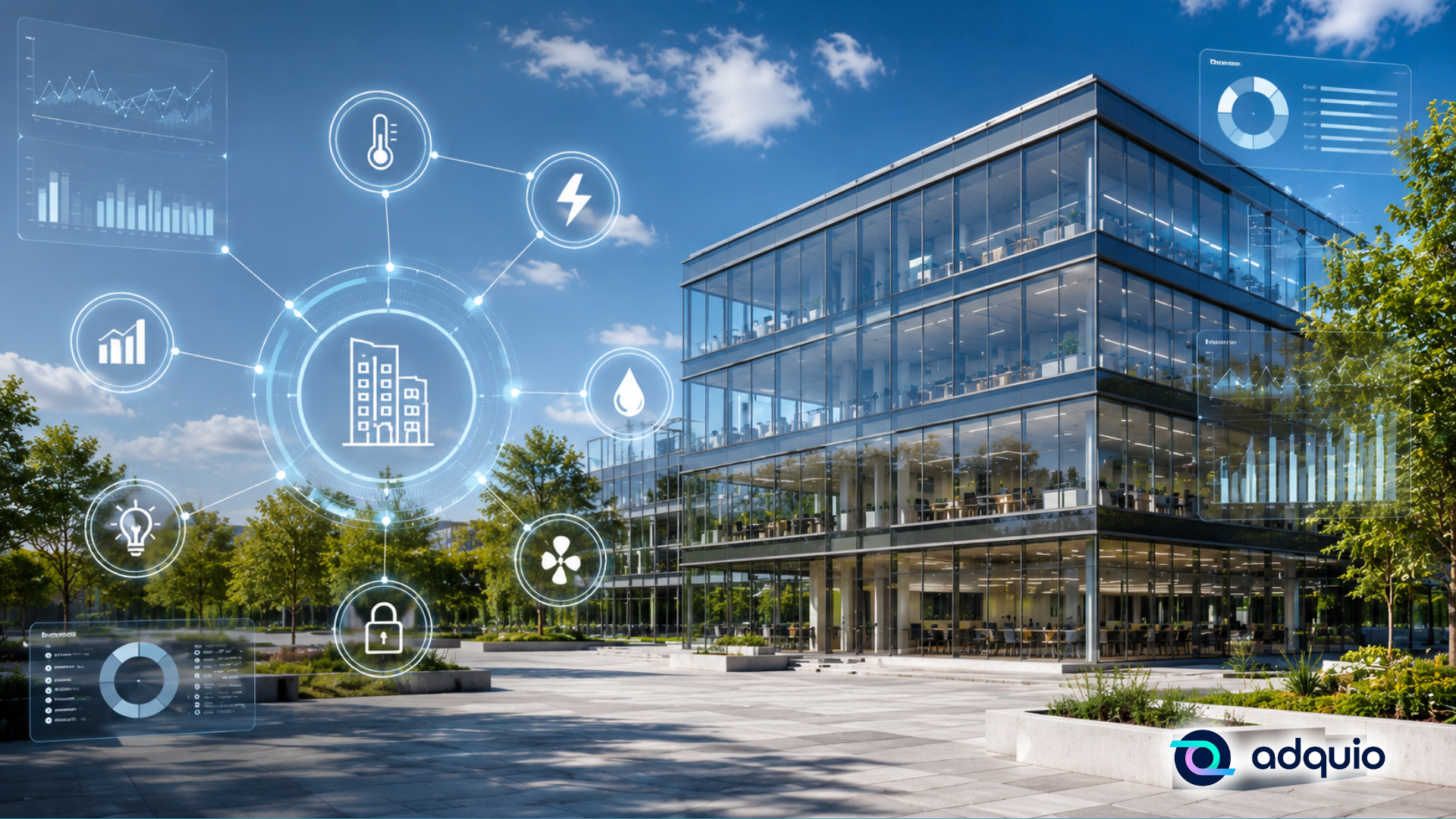
For years, technology in buildings has been purchased as if they were “single apps”: one system for lighting, another for air conditioning, another for energy, another for incidents, another for visualization… And when the time comes to operate, maintain and scale, the reality appears: many parts, little control.
The result is familiar: “custom” integrations that no one wants to touch, screens that don’t talk to anything, alarms that don’t go where they should, and teams that spend more time putting out fires than improving the building.
The alternative is clear: stop thinking of the building as a set of systems and start operating it as a platform.
Welcome to the Building OS approach: the building as an operating system.
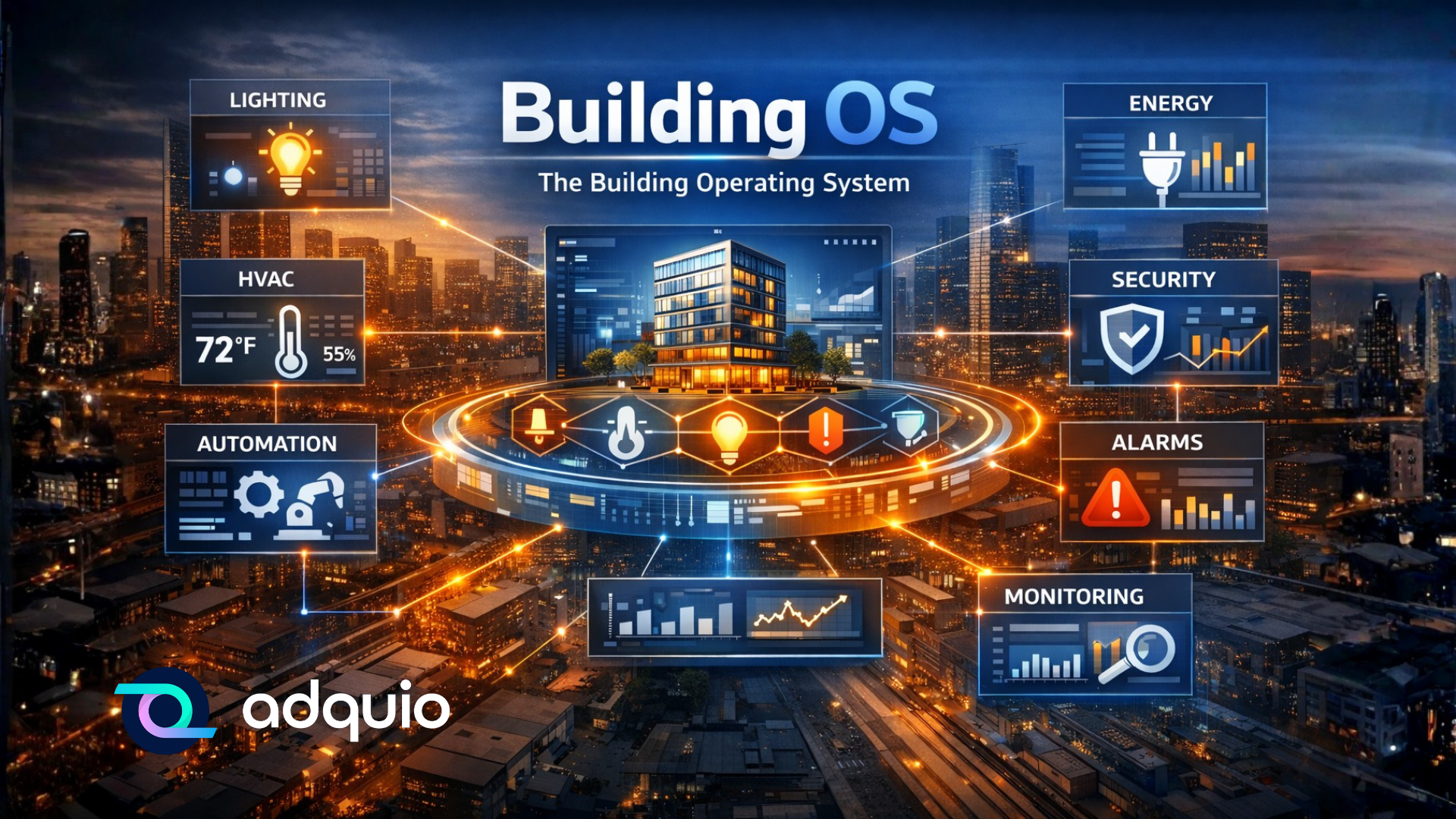
What “Building OS” means (and why it is the new competitive advantage)
An operating system is not an application. It is the layer that:
- Connects (devices, networks, protocols, sites)
- Normalize (data and models)
- Orchestra (automations and actions)
- Protects (roles, permissions, auditing)
- Scale (from 1 building to 100 without redoing everything)
When your building has a Building OS, it ceases to be a “project” and becomes an operable system: predictable, measurable and repeatable.
And this, in 2026, is what separates buildings that “work” from buildings that perform.
The real problem is not the technology. It’s operational friction.

Most equipment does not suffer from lack of sensors or lack of protocols. They suffer from this:
- Data spread over several unrelated platforms
- Fragmented control (each system with its own logic and interface)
- Messy alarms (noise, false positives, no one knows what is critical)
- Limited automation (no context, no global rules, no traceability)
- Multi-site impossible (each building “is a world”)
And here comes the hard part: when you grow up, this friction doesn’t add up… it multiplies.
What a Building OS unifies: 4 layers that change your operation
➊
Data: a single truth, ready to decide
A Building OS converts “single readings” into operable information:
- Unified variables (energy, status, scenes, alarms, comfort)
- Historification and comparable trends between sites Tagged by zone / floor / building / customer / asset,
Without this, there is no management. There is intuition.
➋
Control: operate without “logging into 6 apps”.
The Building OS gives you a common control layer:
- Consistent actions (turn on, regulate, scene, schedule, mode)
- Same permit criteria (who can do what and where)
- Real remote operation, safely, without invention
The goal is not to “control everything”. It is to control what is important, without friction.
➌
Alarms: less noise, more action
An alarm system without hierarchy becomes “spam”.
A Building OS converts alarms into processes:
- Severity, context and responsible party
- Scaling (if unattended, level up)
- Recording and auditing (who did what and when)
- Notifications where it touches (not where it bothers)
Because an alarm is not worth for what it detects, but for what it makes happen.
➍
Automation: rules that can be maintained (and audited)
Automating is not “doing magic”. It’s tidying up.
A Building OS allows you to:
- Rules by schedules, sensors, states and events
- Automations per site, replicable to other sites
- Versioning and traceability (what changed, when and by whom)
Good automation is the one that doesn’t tie you down. It frees you.
Multi-site: the real maturity test
A building can be “pulled through” with patches.
But when you manage 10, 20 or 50 sites, patches become technical and operational debt.
A Building OS is designed for:

Replicating configurations
templates, dashboards, rules
Centralize operation
without losing local control

Reduce OPEX
less travel, less response time, less chaos

Unify metrics
KPIs comparable between buildings
In multi-site, the question is not “does it work?”. It is:
Is it possible to operate without depending on a single person?
Clear signs that you need a Building OS (and you know it)
If you get 2 or more of these, you are at the right time:
- You have several systems and cannot cross-reference data
- Alarms exist but no one follows them
- Each building requires a different “expert
- Remote operation is partial, insecure or inconvenient
- Each integration is a project, not a function
- You want to demonstrate value (savings, comfort, etc.) and you do not have reliable KPIs.
What changes when you operate with a Building OS

It changes the most important thing: your ability to climb without suffering.
- Fewer face-to-face visits (OPEX ↓)
- Faster response (TTR ↓)
- Consistent operation (less dependence on people)
- Improved end-user experience (comfort ↑)
- Decisions based on data (not “it seems to me”)
- Enterprise integration without chaos (BMS/SCADA/BI ready)
And, above all: the building ceases to be a set of “things” and becomes an operable infrastructure.
How Adquio enables it: an ecosystem conceived as a platform
At Adquio, we have been building a simple idea for years:
that the building is managed as a system, not as a puzzle.
That is why the Adquio ecosystem is designed as a unifying layer that:
- Integrates data and control from multiple technologies
- Provides secure remote operation , roles and auditing
- Turn alarms into actionable flows
- Enables maintainable and replicable automations
- Scaling from a single site to a complete portfolio of buildings
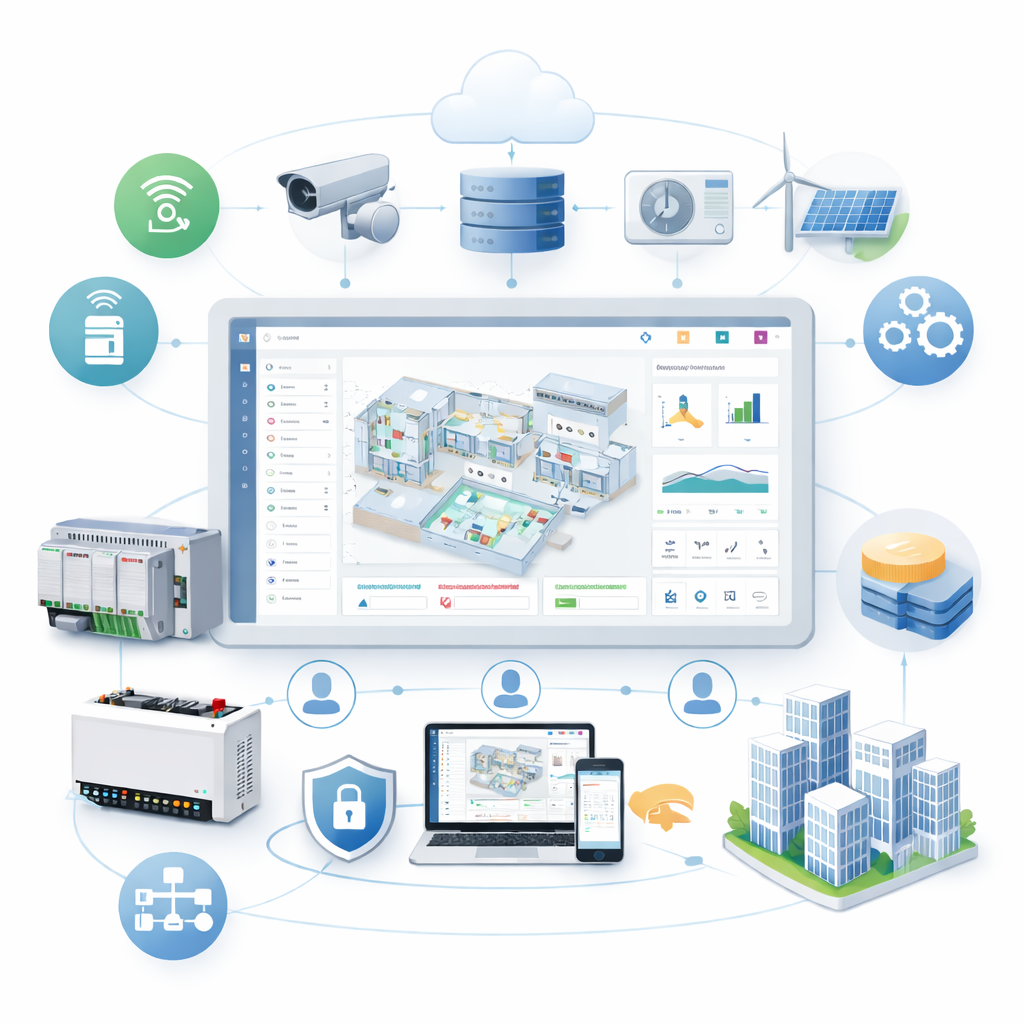
It is not “a screen”. It is not “a gateway”. It is not “a SCADA”. It is the way it operates.
Conclusion: The future is not about connecting more. It is to operate better.
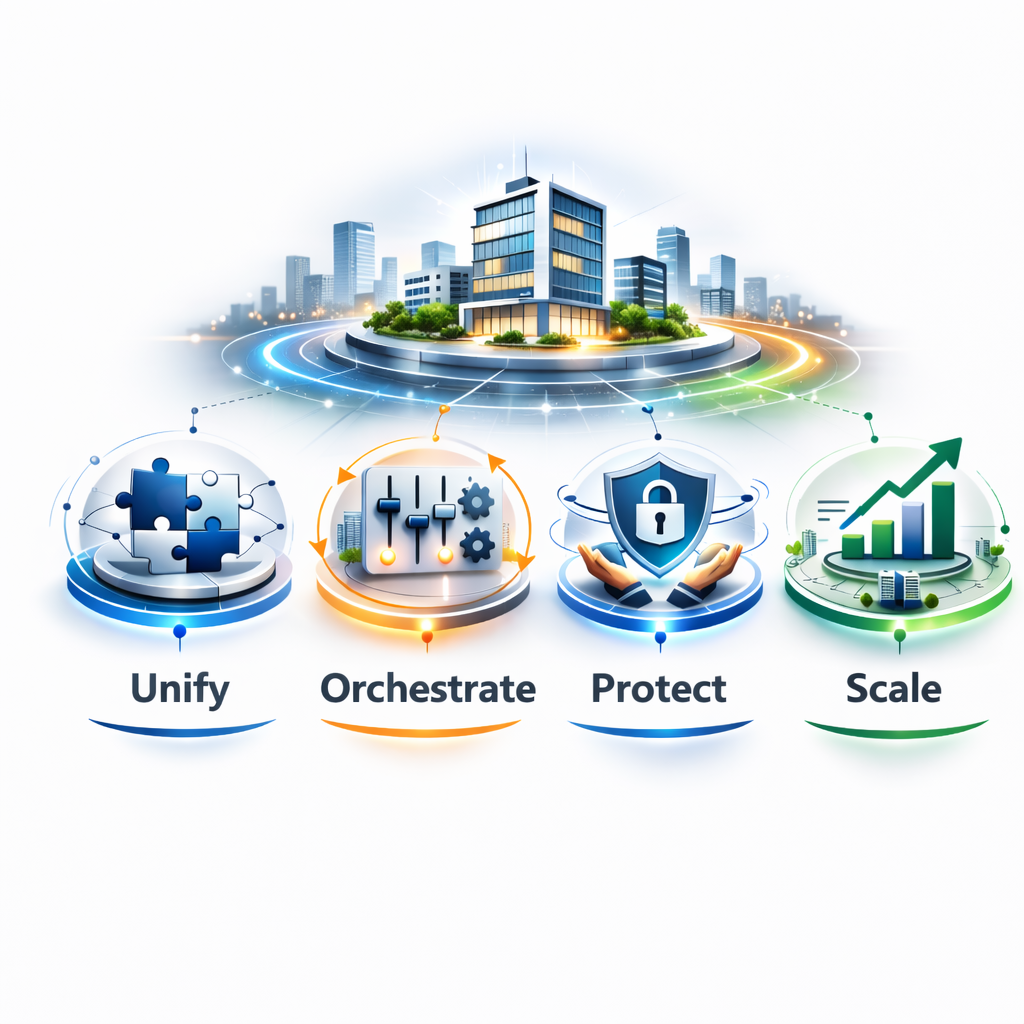
In 2026, connecting devices is no longer an advantage. It’s a requirement.
The advantage is in this:
✅ Unify
✅ Orchestrate
✅ Protect
✅ Scaling
Building OS is not a nice concept. It is the practical answer to a question that all operators ask themselves sooner or later:
How do I manage this without getting eaten up by complexity?
It is the way we operate.
If you want to operate a frictionless multi-site operation, let’s talk about
If you are managing (or will be managing) several buildings and want a Building OS approach that you can deploy and maintain autonomously, tell us about your case.
📩 Write to us and we’ll show you how your unified operation would look like with Adquio: data, control, alarms and automation… in one single layer.