Adquio is preparing a new evolution to open up its professional systems to a much wider range of connected devices, while maintaining the robustness of its current architecture.
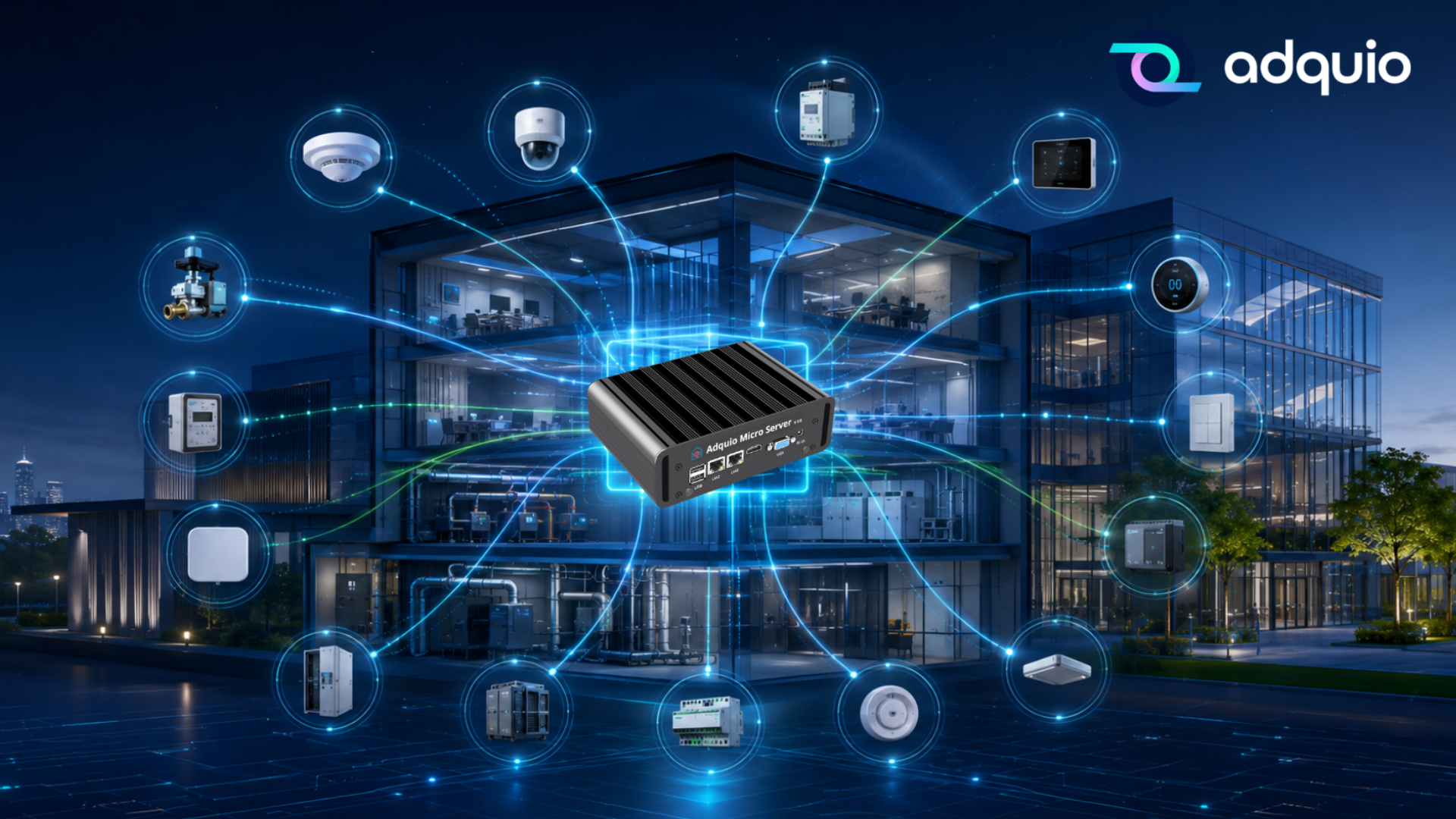
True innovation in a smart building doesn’t always mean adding more devices. Sometimes, the big leap forward comes from getting technologies that were previously separate to understand and work together.
And that’s especially important in real buildings, where nothing starts from scratch.
A facility comprises systems, manufacturers, sensors, actuators, automation components, control equipment, and solutions that must coexist for years. That is why evolution should not mean replacing what already works.
It should mean opening up new possibilities based on what already exists.
That’s where Adquio is preparing to take one of its most important steps.
Expand the system to support many more devices
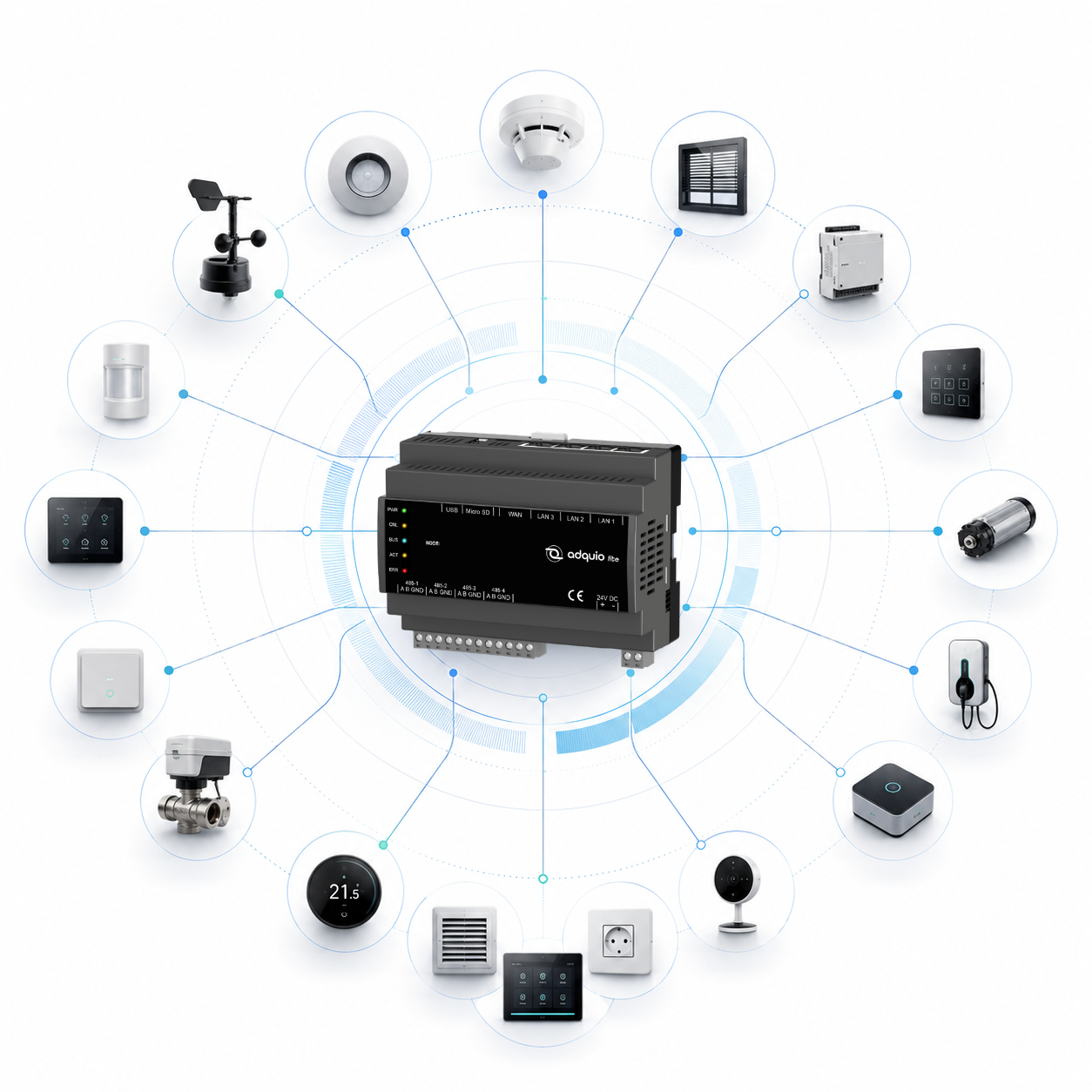
Today, the market offers an ever-increasing number of smart peripherals: sensors, push buttons, actuators, detectors, controls, interfaces, and comfort devices that can add significant value to any project.
The challenge is clear:
How can we incorporate them without turning every installation into a custom integration?
And, above all:
How can we do this without sacrificing the robustness of a professional platform like Adquio?
The solution does not involve dismantling the current architecture. Go ahead and expand it.
Adquio is preparing to integrate with a new generation of connected networks, allowing facilities to expand more freely and access a much broader ecosystem of devices.
A two-way bridge
This development will not be a simple integration.
It will be a two-way communication.
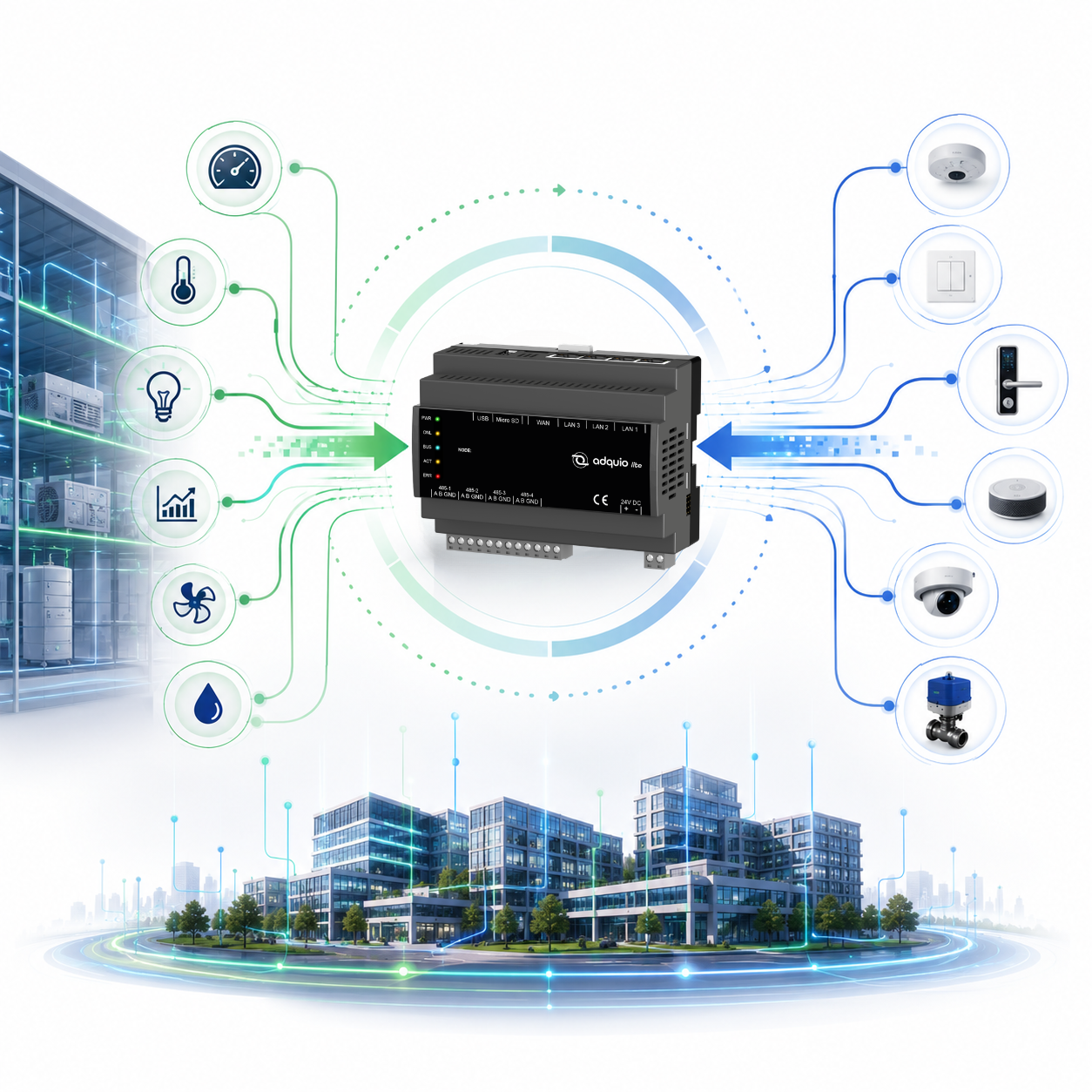
On the one hand, Adquio will be able to share information derived from its own variables—such as statuses, signals, measurements, values, alarms, scenes, or data from equipment that is already part of the installation—with this new network.
On the other hand, Adquio will be able to act as a central node capable of coordinating and integrating new connected devices within the building’s ecosystem.
This is a real game-changer.
Because Adquio will be able to support more devices.
In addition, everything that is already connected to Adquio will be able to be displayed externally through a new, unified interface.
In practice, an existing installation can gain new capabilities without having to be redesigned from scratch.
Installed systems are also evolving
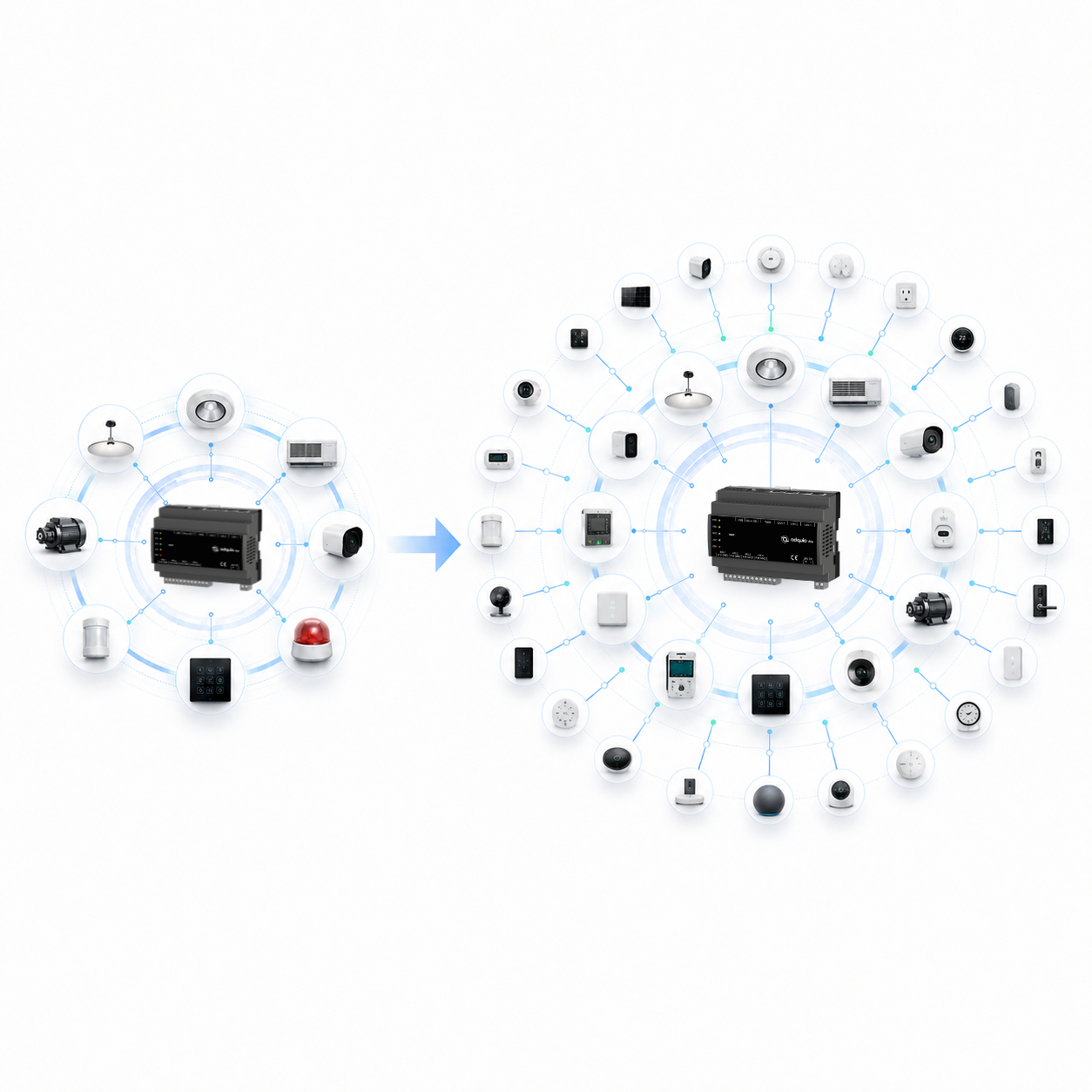
This is the most important point.
- A lighting variable.
- A weather condition.
- An energy measurement.
- An alarm.
- A scene.
- A sensor.
- A team managed from Adquio.
This entire universe of data and actions will be able to gain a new layer of compatibility.
- For the integrator, this means greater design freedom.
- For the customer, this means protecting their investment.
- For the building, this means being able to grow without being limited to a single catalog of devices.
And for Adquio, this opens the door to the next-generation smart peripherals market.
More freedom, without losing control
Expanding to more devices shouldn’t mean sacrificing reliability.
On the contrary.
It should allow for better decision-making, enable greater flexibility in tailoring each project, and ensure a coordinated, secure, and professional architecture.
That is the direction Adquio is heading: a platform capable of connecting the existing with the new, the professional with the everyday, and today’s setup with the opportunities of tomorrow.
We’re not talking about a one-time integration.
We’re talking about a new layer of openness for the entire Adquio ecosystem.
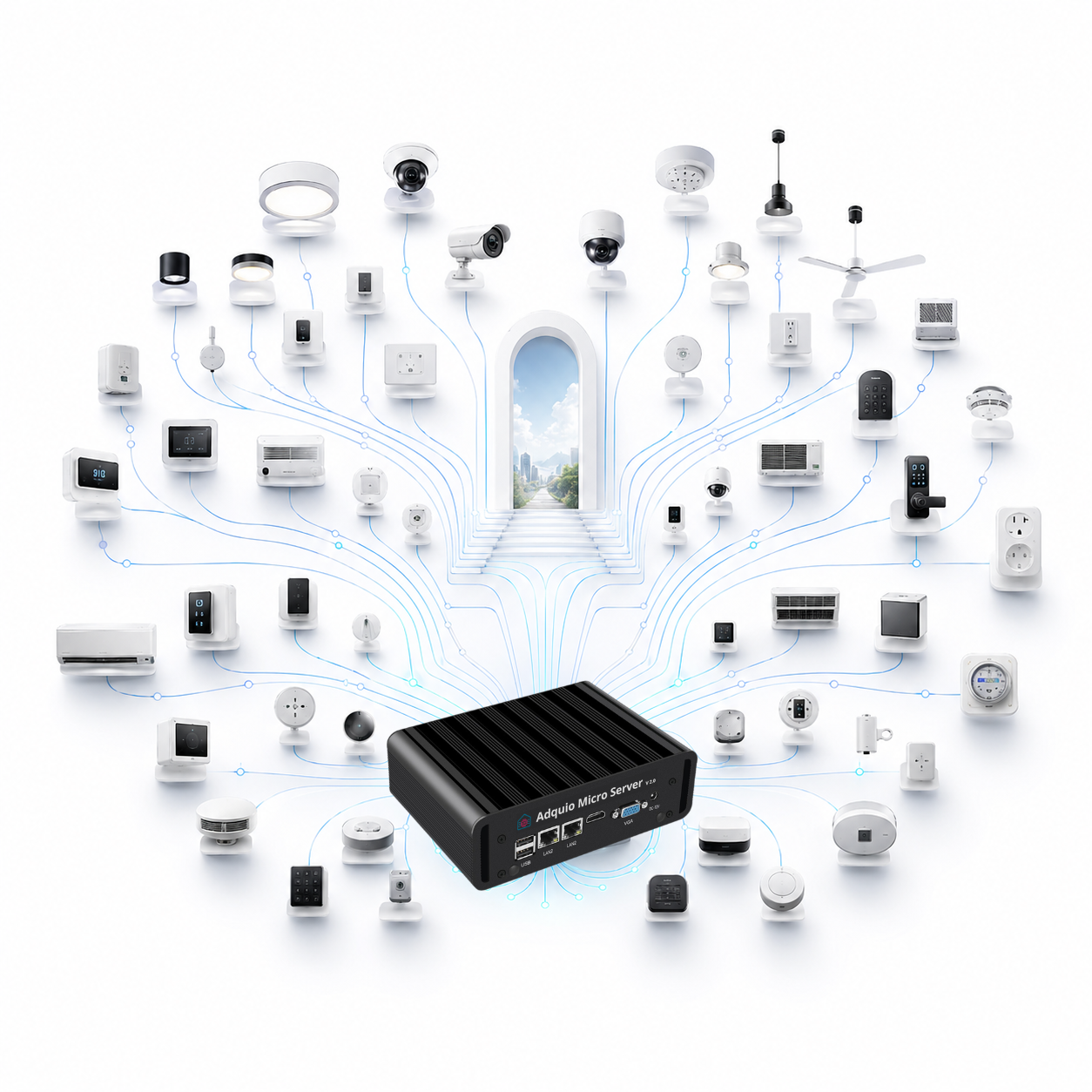
We’ll have more to share very soon
We can’t reveal all the details just yet.
But we can reveal the central idea: Adquio is developing an upgrade that will allow it to open its systems to a much wider range of connected devices and integrate its own variables into next-generation smart grids.
This will be an important step for system integrators, customers, and projects that need to combine professional reliability, freedom of choice, and scalability.
Because the future of smart buildings will not be defined by closed systems.
It will be defined by platforms capable of blazing new trails.
And Adquio is ready to open a very large one.