
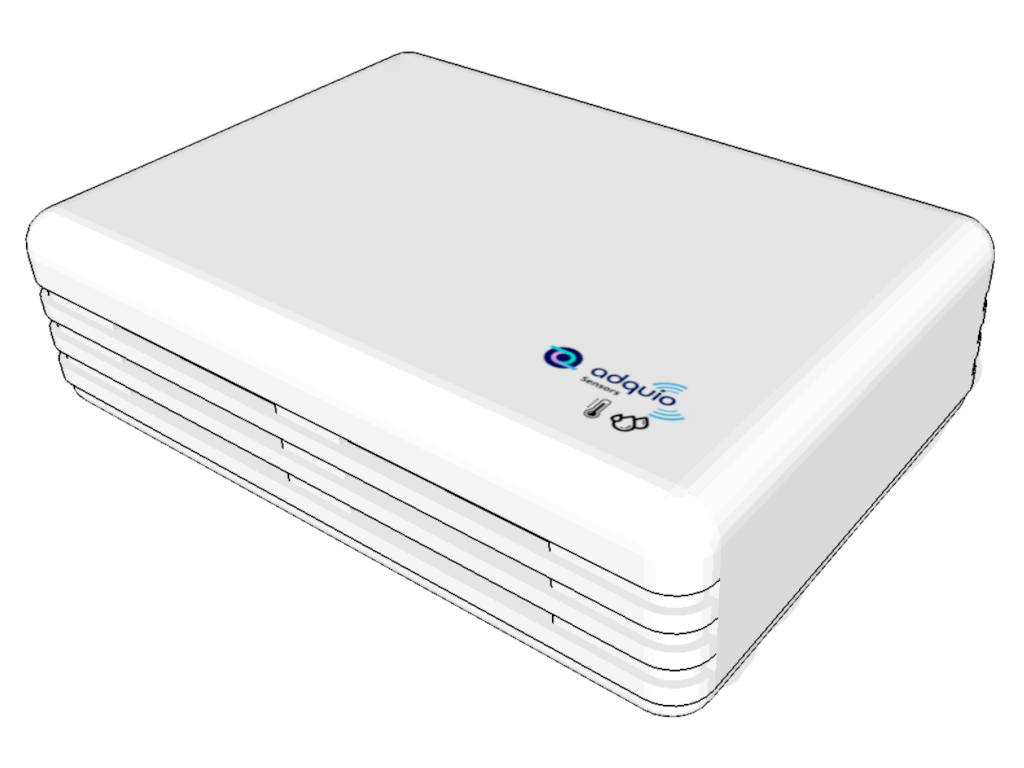
Simple wireless probe
Adquio LoRa Sensors
Adquio LoRa Sensors is a compact device that integrates Temperature and Humidity probes. It uses LoRa technology for its connection, which allows for outstanding wireless communication inside buildings, penetrating walls and ceilings without major problems.
It is powered by one or two 18650 rechargeable batteries, if you use 2 the battery life can be up to 8 years. Not only that, but it is important to note that these batteries, once used, can be recharged and used again without any difficulty.
Its main features are: small size and reliability. This probe requires a receiver, which is connected via Modbus RTU to any Adquio or other controller that supports this protocol.
Adquio LoRa Sensors
TECHNICAL DATA
How to open it
The Adquio Ecosystem probes that use LoRa have the connections internally, this allows that once installed the box is completely clean and free of cables.
Therefore, in order to be able to connect it, it is necessary to open it. To do so, you only need to help yourself with a flat screwdriver (no larger than 2.5 mm in diameter) by placing it in the position provided for this purpose, and pull up the top cover.


What you should know about its interior
Adquio LoRa sensors can carry either one or two 18650 batteries, if you want a very long battery life you must place two units.
Within the probe, there are several points that deserve our interest:
- Position of the batteries, it is very important to respect its polarity, for it, you have some very clear indications in the own plate. If for any reason the batteries are installed incorrectly, the device is protected from damage, but will not function.
- Link jumper. You will receive your probe with a Jumper, but it will be disconnected. If you connect it you will put the probe in link mode with the receiver.
- Link confirmation LED. It turns on steady when you set the jumper, this may take up to a minute, as the probe will be in sleep mode. Once this time has elapsed, the LED will light up and flash once, indicating that the pairing message has been sent. When paired correctly, this LED will blink 4 times in a row. Once this happens, you must remove the jumper you had connected in the previous step.
Certifications
Safety and Health
EN ISO 13849-1: 2015
EN ISO 13849-2: 2012
EN 62061: 2005 + A1: 2013 + A2: 2015
EN 60950-1: 2006
EN 62311: 2008
EMC
EN 61000-6-4: 2007 + A1: 2011
EN 61000-6-2: 2005
RoHS
EN 50581:2012
