EPBD 2024 and BACS: the new opportunity to turn buildings into intelligent systems

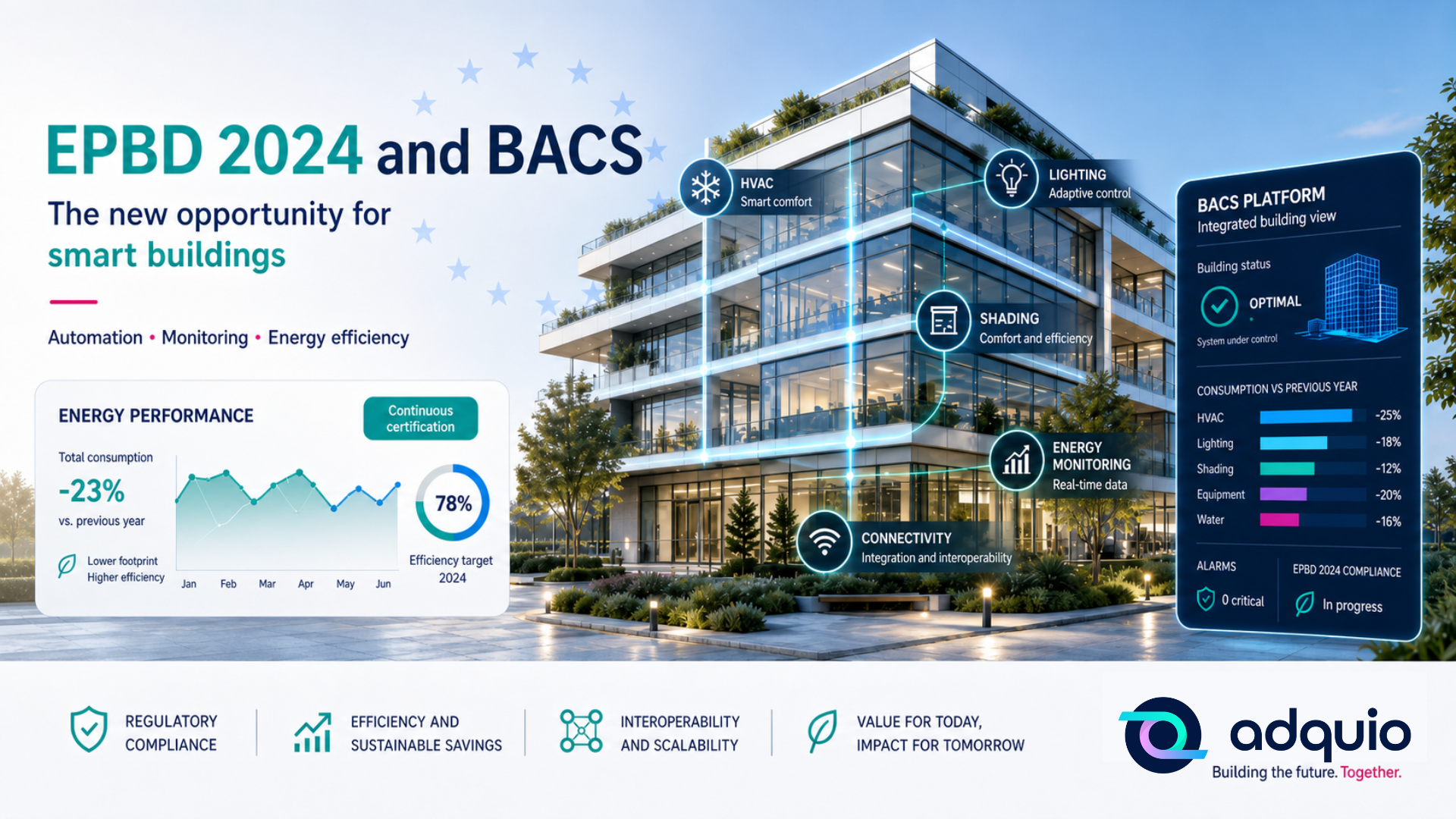
The new European Energy Performance of Buildings Directive, EPBD 2024, marks a profound change in the way automation is understood. It is no longer just about installing efficient equipment. It is about the building being able to monitor, control, optimize and demonstrate how it consumes energy.

The EPBD 2024 was published in May 2024 and Member States must adapt their regulations by May 29, 2026. In addition, it introduces obligations related to automation and control systems in buildings, especially in non-residential buildings with technical installations above 70 kW.

This is where BACS, Building Automation & Control Systems, evaluable according to EN ISO 52120-1, come in. This standard classifies the functional level of building automation into four classes: D, C, B and A. Class C represents minimum compliance, while Classes B and A are geared toward advanced automation, with demand-based control, continuous monitoring, interoperability and energy optimization.
EPBD 2024 y BACS: la nueva oportunidad para convertir edificios en sistemas inteligentes La nueva Directiva Europea de Eficiencia Energética en Edificios, EPBD 2024, marca un cambio profundo en la forma de entender la automatización. Ya no se trata solo de instalar equipos eficientes. Se trata de que el edificio sea capaz de monitorizar, controlar, optimizar y demostrar cómo consume energía. La EPBD 2024 fue publicada en mayo de 2024 y los Estados miembros deben adaptar su normativa antes del 29 de mayo de 2026. Además, introduce obligaciones relacionadas con los sistemas de automatización y control en edificios, especialmente en edificios no residenciales con instalaciones técnicas superiores a 70 kW. Aquí es donde entran los sistemas BACS, Building Automation & Control Systems, evaluables según la norma EN ISO 52120-1. Esta norma clasifica el nivel funcional de automatización de un edificio en cuatro clases: D, C, B y A. La Clase C representa el cumplimiento mínimo, mientras que las Clases B y A se orientan a una automatización avanzada, con control basado en demanda, supervisión continua, interoperabilidad y optimización energética. Cumplir no será suficiente: habrá que demostrarlo Uno de los puntos más importantes es entender que no se certifica un producto aislado. Lo que se evalúa es la instalación completa y su capacidad real para habilitar un determinado nivel funcional del edificio. Por eso, el valor no está solo en tener un sistema de control, sino en disponer de una plataforma capaz de conectar todos los subsistemas del edificio, generar datos fiables, registrar históricos, facilitar auditorías y ofrecer una visión clara al facility manager. Y ese es precisamente el terreno natural de ADQUIO. ADQUIO como plataforma para edificios preparados para BACS Clase B y A ADQUIO permite integrar en un único entorno los principales dominios que contempla la ISO 52120: climatización, iluminación, persianas y sombreado, monitorización, eficiencia energética e interoperabilidad. La plataforma combina control local, supervisión SCADA, acceso cloud, lógica programable, históricos, alarmas, reporting y comunicación con múltiples protocolos abiertos. Esto significa que un edificio equipado con ADQUIO puede pasar de una automatización básica basada en horarios a una gestión mucho más inteligente: control por ocupación real, regulación de iluminación por presencia o luz natural, setpoints adaptativos por zona, coordinación entre HVAC e iluminación, monitorización continua, submetering energético, KPIs comparativos y conexión con sistemas externos mediante protocolos como BACnet, Modbus, MQTT, KNX, DALI, Casambi o API REST. La normativa como ventaja comercial Durante años, muchos edificios han funcionado con sistemas aislados: una plataforma para climatización, otra para iluminación, otra para contadores, otra para alarmas y otra para informes. Ese modelo ya no encaja con el futuro regulatorio ni con las necesidades reales de propietarios, gestores e inversores. La nueva EPBD acelera una tendencia inevitable: los edificios tendrán que ser más eficientes, más medibles y más fáciles de auditar. Para los propietarios, esto significa reducir consumo, mejorar confort, preparar el activo para exigencias ESG y aumentar su valor inmobiliario. Para los integradores y partners, significa una nueva oportunidad: acompañar al cliente no solo en la instalación, sino también en el camino hacia el cumplimiento funcional del edificio. ADQUIO no sustituye al auditor ni al técnico competente. Pero sí puede facilitar la documentación, los datos y la trazabilidad necesarios para demostrar qué funciones están activas y cómo contribuyen al nivel BACS del edificio. De obligación normativa a edificio inteligente La EPBD 2024 no debe verse como una carga. Es una señal clara del mercado: los edificios que no puedan medir, controlar y optimizar su comportamiento energético quedarán atrás. Con ADQUIO, la automatización deja de ser una capa técnica invisible y se convierte en una herramienta estratégica para cumplir, ahorrar, operar mejor y preparar los edificios para el futuro. La normativa marca el camino. La tecnología ya está preparada. Ahora es el momento de convertir el cumplimiento en una ventaja competitiva.

Compliance will not be enough: it will have to be demonstrated.

One of the most important points is to understand that an isolated product is not certified. What is evaluated is the complete installation and its real capacity to enable a certain functional level of the building.

Therefore, the value is not only in having a control system, but in having a platform capable of connecting all the subsystems of the building, generating reliable data, recording historical data, facilitating audits and providing a clear vision to the facility manager.

And that is precisely ADQUIO’s natural terrain.
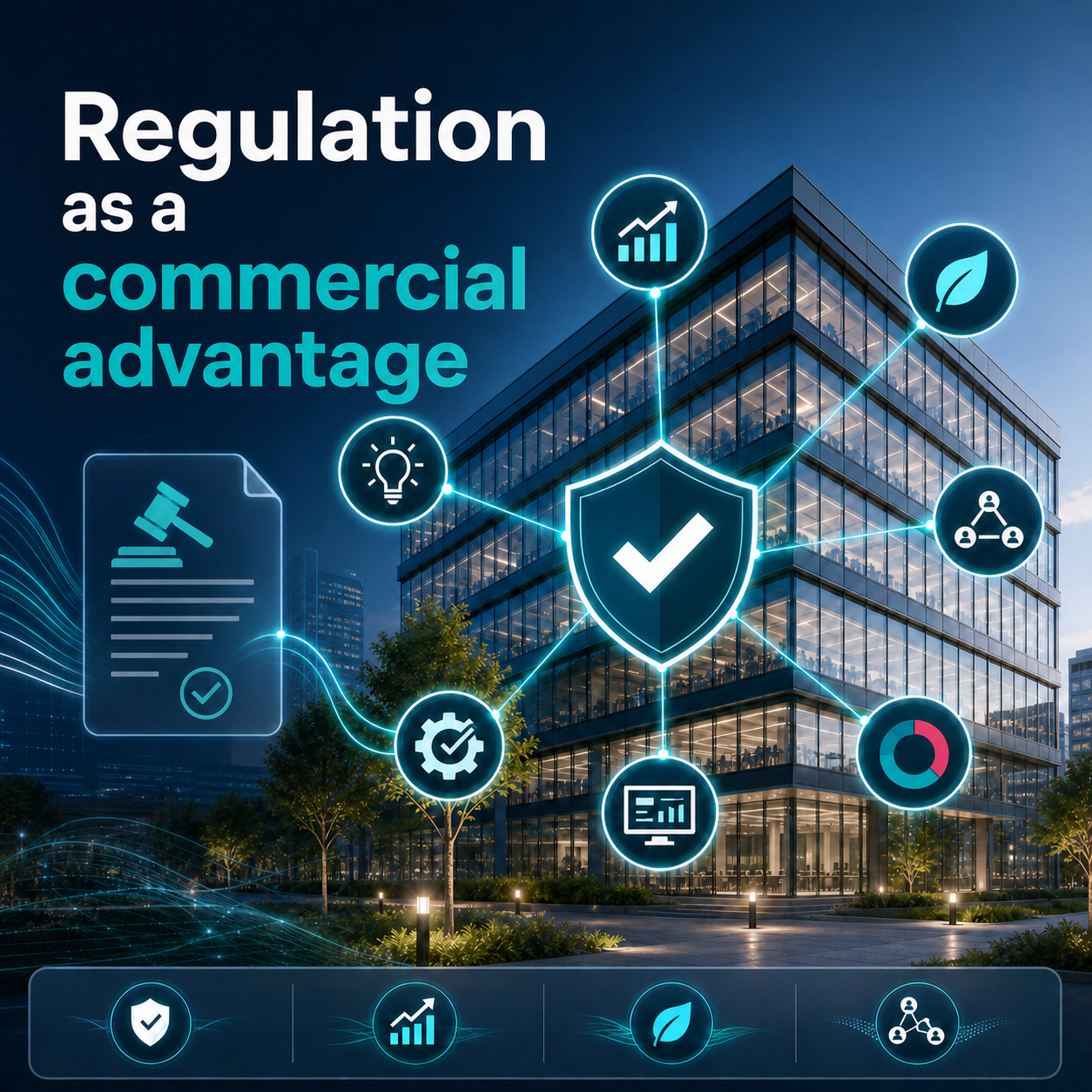
For years, many buildings have operated with isolated systems: one platform for HVAC, one for lighting, one for meters, one for alarms and one for reporting. That model no longer fits the regulatory future or the real needs of owners, managers and investors.

The new EPBD accelerates an inevitable trend: buildings will have to become more efficient, more measurable and easier to audit.

For owners, this means reducing consumption, improving comfort, preparing the asset for ESG requirements and increasing its real estate value. For integrators and partners, it means a new opportunity: accompanying the customer not only in the installation, but also on the way to functional compliance of the building.

ADQUIO does not replace the auditor or the competent technician. But it can provide the documentation, data and traceability needed to demonstrate which functions are active and how they contribute to the BACS level of the building.

EPBD 2024 should not be seen as a burden. It is a clear signal from the market: buildings that cannot measure, control and optimize their energy performance will be left behind.

With ADQUIO, automation ceases to be an invisible technical layer and becomes a strategic tool to deliver, save, operate better and prepare buildings for the future.
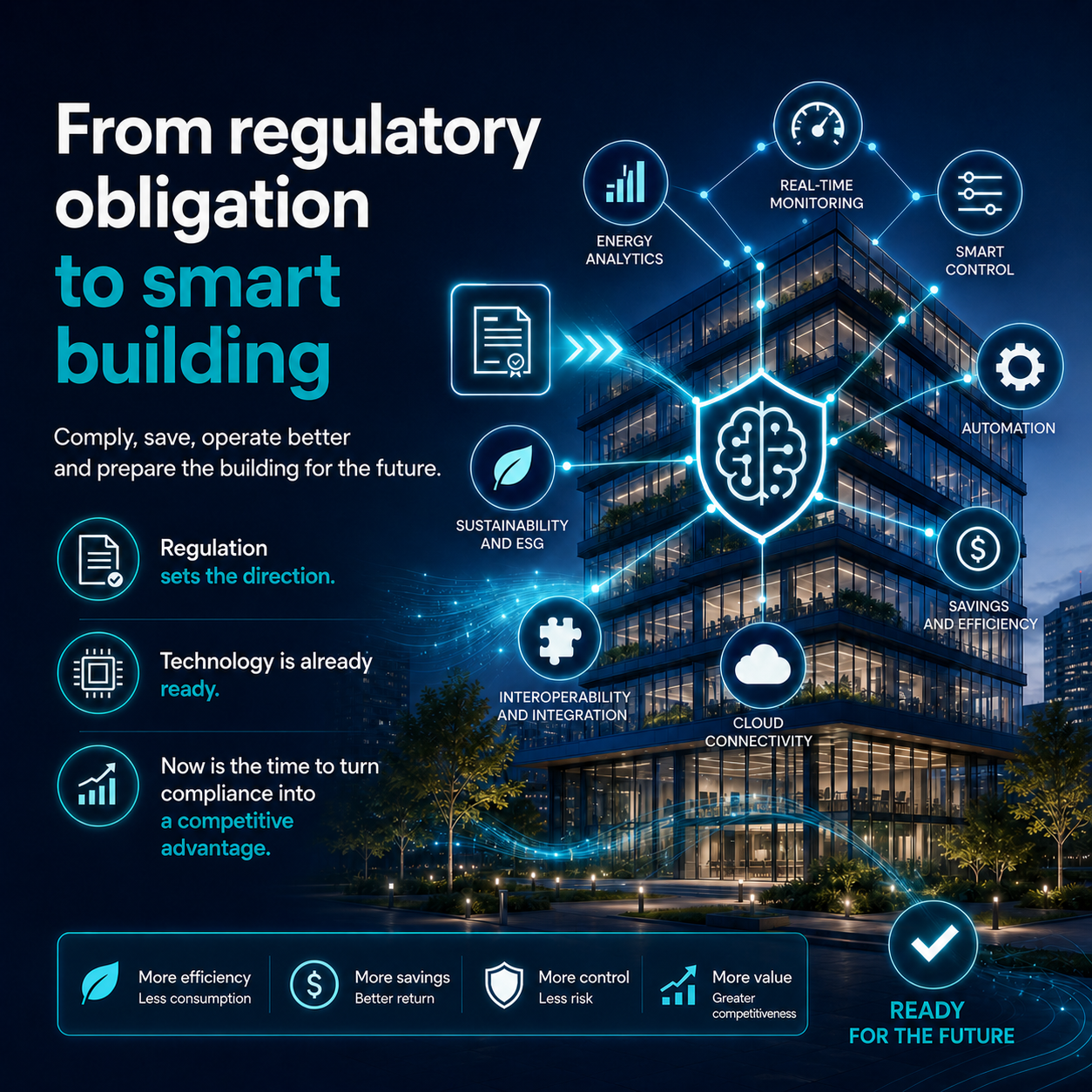
From regulatory obligation to smart building

Regulations lead the way. The technology is ready.
Now is the time to turn compliance into a competitive advantage.

Find out how ADQUIO can help you prepare your buildings for BACS Class B and A.

Leave a Reply

Privacy Overview
Adquio

This website uses cookies so that we can provide you with the best user experience possible. Cookie information is stored in your browser and performs functions such as recognising you when you return to our website and helping our team to understand which sections of the website you find most interesting and useful.

Strictly Necessary Cookies

Strictly Necessary Cookie should be enabled at all times so that we can save your preferences for cookie settings.