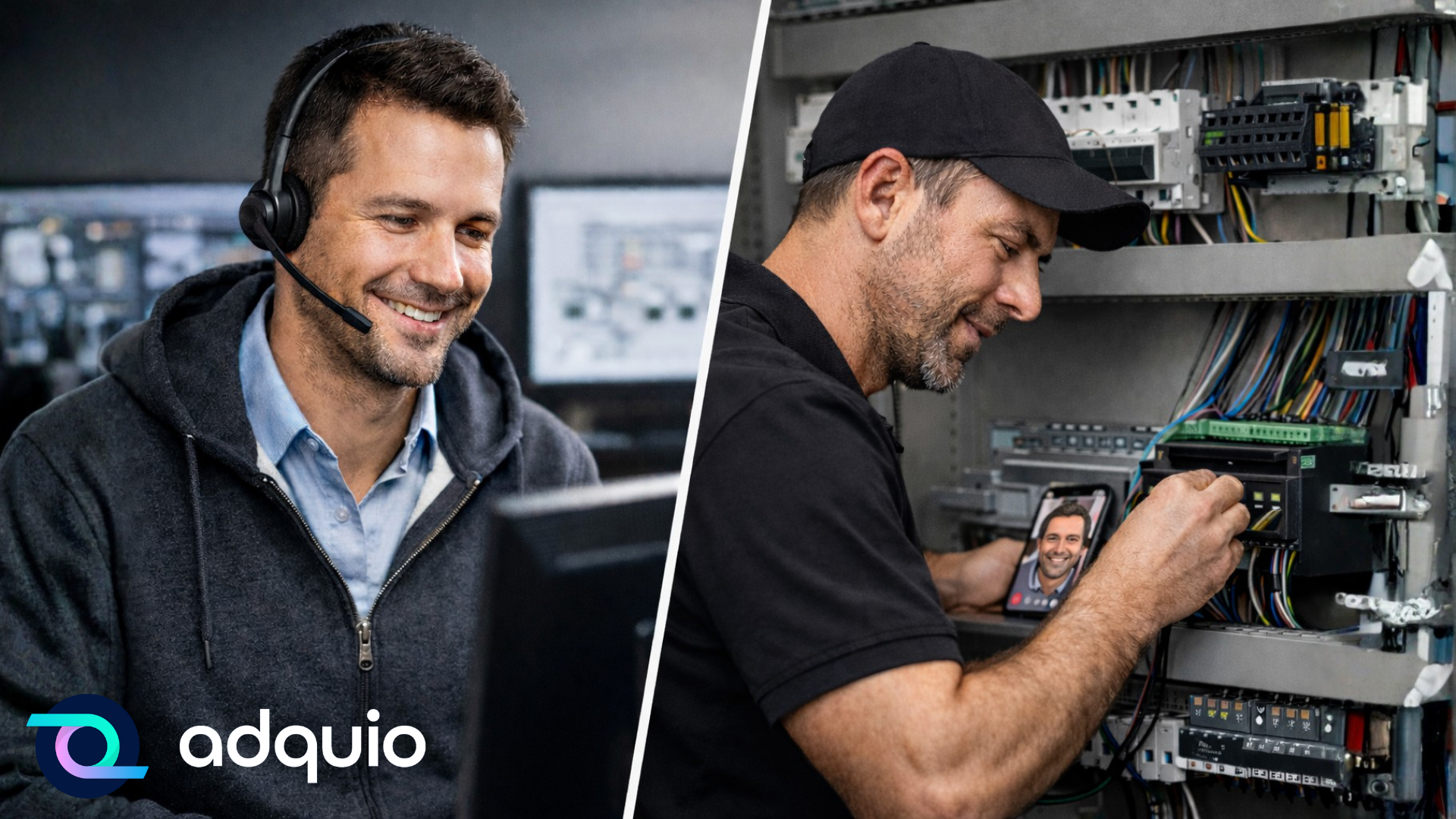
Imagine a client calls because the lighting in their building is not working as it should. The building is 150 kilometres away. Do you really need a 300-kilometre round trip to change a setting you could adjust in five minutes?
This situation is much more common than you might think.
Every day, maintenance technicians, installers and integrators travel tens or hundreds of kilometres to resolve issues that, in many cases, could be handled without leaving the office.
Changing a schedule, adjusting a temperature, checking an alarm, modifying a lighting scene or reviewing a controller’s programming.
These are necessary tasks, but they do not always require someone on site.
Remote access technology is changing that.
Today, we can bring the technician to the building without physically sending them there.
That transforms how installations are maintained and managed.
The hidden cost of a technical site visit
When we think about the cost of travel, we usually think of fuel and mileage.
But the real cost is much greater.
Consider an apparently simple service call.
A client reports that their hotel’s exterior lights are coming on too early.
The technician needs to travel to the hotel, check the programming and change the schedule.
The adjustment itself may take only ten minutes.
Yet if the hotel is an hour and a half away, the complete job involves:
- Three hours of travel for the round trip.
- Ten or twenty minutes of work on site.
- Fuel consumption and vehicle wear.
- Time the technician cannot spend on other clients.
- Possible additional parking, meal or accommodation expenses.
A ten-minute task can end up consuming almost half a working day.
And that travel time adds no extra technical value for the client.
The value comes from resolving the problem.
What does controlling an installation remotely actually mean?
Remote control allows an authorised technician to access selected building systems through a communications connection, usually over the Internet.
From their office, home or another authorised location, they can review information and carry out the operations supported by the installation.
For example:
Diagnose problems. Check statuses, variables and alarms to identify what is happening.
Modify settings. Change schedules, setpoints or operating parameters.
Adjust automation. Correct or improve controller programming.
Monitor installations. Check whether equipment is operating correctly.
Verify results. Use available data to check whether changes have had the intended effect.
All without travelling to the site.
Access must, of course, use appropriate permissions, protected communications and safe procedures.
Authorised professionals need a controlled way to work, with building systems properly protected from unrestricted Internet access.
An example: maintaining a retail chain
Imagine a maintenance company responsible for 40 stores in different cities.
Each store has lighting, HVAC and control systems.
At one, the manager reports that the air conditioning keeps running after closing time.
Another needs to change the shop window lighting schedule.
A third has a controller behaving unexpectedly.
Without remote access, the technical team must organise journeys, coordinate appointments and spend many hours visiting different locations.
With remote access, the procedure changes.
The technician accesses the first installation, checks its schedules and corrects the programming.
They then access the second and change when the shop window lights switch on.
Finally, they check the third store’s controller, assess its status and decide whether they can resolve the issue or need to send someone.
Three incidents, three different locations and the possibility of resolving them without making three journeys.
Not every intervention can be completed remotely. Even when a visit is necessary, however, a preliminary diagnosis helps the technician arrive better prepared.
Adquio Nexus: access the heart of your installations from anywhere
This is where one of the tools in the Adquio ecosystem comes in.
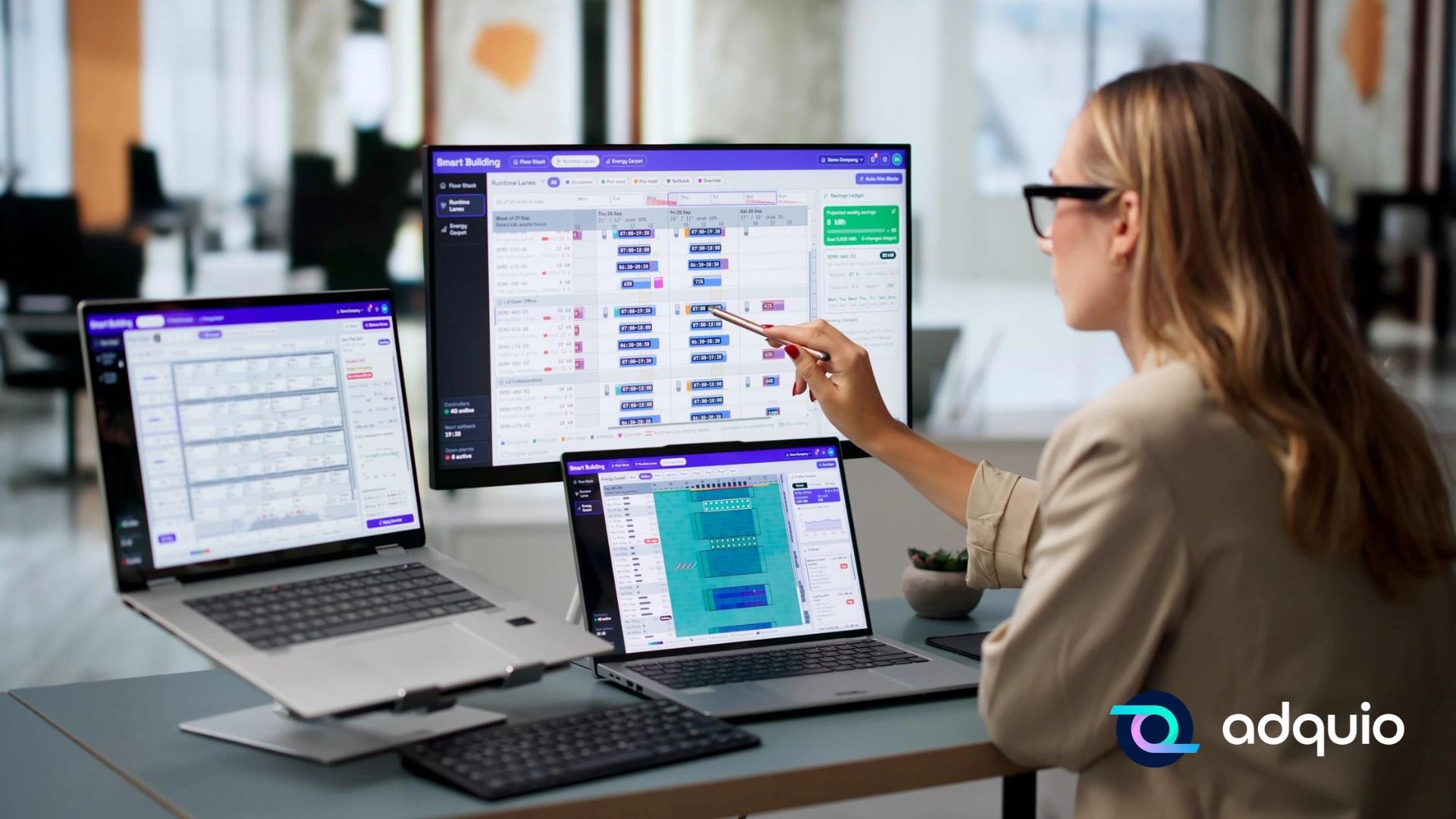
Adquio Nexus provides remote access to Adquio controllers and Adquio SCADA Server systems.
An authorised installer, integrator or technical manager can therefore access their installations without being physically present in the building.
Imagine you have installed an Adquio system to manage lighting and HVAC in a corporate building.
Months later, the client asks to change the operating schedule on one floor.
You can use Adquio Nexus to access the controller and make the necessary adjustments from your workplace.
Need to review an automation? You can access the system.
Want to change elements of the SCADA interface? You can work on the installation remotely.
Has the client reported unexpected behaviour? You can connect, review the configuration and begin diagnosing the problem.
With Adquio Nexus, distance stops being a barrier to many maintenance and support tasks.
This is especially useful for professionals managing numerous projects in different locations.
The real value for the installer
Consider an integrator maintaining twenty Adquio installations.
Previously, every small change could become a site visit.
Now many of those tasks can be carried out from their desk.
That means more available time, faster responses and the ability to support more installations without a proportional increase in resources.
It also gives clients something valuable: a professional who can start helping without waiting for a gap in a travel schedule.
Adquio Full Remote Access for Casambi: work as though you were on site, from hundreds of kilometres away
So far, we have discussed controllers and management systems.
Another particularly useful application is Casambi lighting installations.
Casambi is widely used to control lighting through Bluetooth communications.
It offers extensive configuration, scene creation, grouping and scheduling capabilities.
However, certain advanced configuration and maintenance tasks require local network access through the Casambi app.
That creates a familiar problem for installers.
What happens when you need to perform an operation that requires local Bluetooth access, but the installation is in another city or even another country?
Traditionally, this could mean sending a technician to the site.
The solution: Adquio Full Remote Access for Casambi
Adquio has developed a solution for remotely accessing the Casambi app’s local functions, as though the technician were physically beside the network.
It is called Adquio Full Remote Access for Casambi.
How it works is straightforward.
A dedicated device is installed in the building, with Bluetooth connectivity to the Casambi network and an Ethernet connection with PoE power.
The device runs Android and the Casambi app.
Through a protected communications infrastructure, an authorised technician can access that app remotely and use its local functions.
The solution also uses an Adquio controller to manage communications and supports centralised organisation of installations and networks.
The result is particularly useful:
You can work with the installation’s Casambi app without being physically there.
A realistic example: modifying a lighting installation from another country
Imagine you are a lighting integrator in Spain who has completed a project at a hotel in Italy.
The client decides to change the layout of a function room and needs to adjust some lighting scenes.
Previously, certain operations might have required a technician to travel to the hotel.
With Adquio Full Remote Access for Casambi, where the required operation is supported by the installation, you can access the building’s Casambi app from your office.
You can review the configuration, make the changes and check the behaviour using the available information and verification methods.
The client receives a much faster response.
You avoid an international trip.
And both parties make better use of their time and resources.
This is particularly valuable for integrators working on hotels, museums, stores, offices and international projects.
More than switching lights on and off
This point matters.
Some solutions provide remote control of basic lighting functions.
Adquio Full Remote Access for Casambi is designed to provide access to the Casambi app functions normally used while connected locally to the network.
That level of access is especially useful for configuration, support and advanced maintenance.
The solution also supports multiple installations, authorised users and encrypted communications.
How much money can remote maintenance actually save?
Let’s look at a simple example.
A company makes twenty site visits per month to handle incidents or minor changes.
Suppose each visit costs an average of €150 in technical time, transport and other expenses.
The monthly cost would be €3,000.
If remote access avoids fifteen of those visits, the gross saving would be €2,250 per month.
That is €27,000 per year in avoided travel-related costs.
This does not include other benefits, such as being able to support more clients, respond faster or avoid some service interruptions.
This is an illustrative example. Actual savings depend on the number of interventions, distances and operating costs, and must account for the cost of the remote service itself.
It highlights an important point:
The return on remote access comes from both what it enables and the work it makes unnecessary.
Does this mean we no longer need technicians on site?
Not at all.
A remote access system cannot replace a failed power supply, repair a broken cable, replace a faulty sensor or perform certain physical checks.
Nor should it be used for potentially hazardous operations without the necessary safety measures.
On-site interventions will remain essential.
Remote control helps you make better use of them: reserve travel for situations where being on site adds value.
Even when a technician needs to attend, having information beforehand can make a major difference.
They can arrive with a preliminary diagnosis, the right tools and, where possible, the necessary replacement part.
A visit that would once have been used to discover the problem can become a visit to resolve it.
A new way to provide maintenance
Remote access does more than reduce costs.
It can also change the relationship between an installer and their client.
Many integration companies have traditionally worked mainly on a project basis: install a system, commission it and return when an incident occurs.
What if they could offer ongoing supervision and support?
With suitable tools, remote maintenance contracts can include regular reviews, small adjustments, operational checks and technical assistance.
The client receives a more accessible and predictable service.
And the integrator can develop a long-term professional relationship supported by recurring services.
The installer becomes the professional who helps keep the system working correctly throughout its life.
This is especially useful for companies managing installations across several cities or countries.
Faster responses for clients, more capacity for professionals
Imagine a hotel calls its installer because it urgently needs to change the lighting in a space hosting an event that afternoon.
Without remote access, the response depends on technician availability, travel and arranging the visit.
With remote access, the professional can begin working once an authorised connection is available and the necessary systems are operational.
The difference goes beyond cost.
It also affects service quality and the client’s confidence in their provider.
There is another benefit: a technician who spends fewer hours driving has more time to diagnose, improve and maintain other installations.
Remote access security is essential
Connecting to an installation remotely should preserve its security.
Access must be protected, restricted to authorised people and based on appropriate permissions for each user.
Professional solutions should provide mechanisms such as encrypted communications, authentication, user management and connection control.
Adquio Full Remote Access for Casambi uses encrypted tunnels and security certificates for authorised users.
In every installation, the tool’s capabilities should be accompanied by good cybersecurity, credential management and maintenance practices.
The aim is to make the technician’s work easier while retaining control over who can access the building and which operations they can perform.
When is remote access worth adding to your installations?
You do not need to manage hundreds of buildings to benefit.
Remote access can be useful when installations are far from your base, clients are in different cities, projects are international or requests for adjustments and maintenance are frequent.
It is also particularly useful for systems that need regular changes, such as architectural lighting, HVAC, automation or control interfaces.
A good starting point is to review the interventions carried out over recent months.
Ask yourself:
- How many visits were made solely to change parameters?
- How many incidents could have been diagnosed without travelling?
- How much time did technicians spend on the road?
- How many on-site interventions could have been better prepared through remote diagnosis?
- How quickly could we respond if we had immediate access to the systems?
The answers can reveal improvement opportunities that have remained hidden until now.
Adquio: technology that brings your installations closer, wherever they are
At Adquio, we develop solutions that help installers, integrators and maintenance managers work more efficiently.
We know physical distance is one of the biggest challenges of distributed installations.
That is why our ecosystem includes dedicated remote connectivity tools.
Adquio Nexus provides remote access to Adquio controllers and SCADA systems for a wide range of monitoring, configuration and support tasks.
Adquio Full Remote Access for Casambi extends remote access to Casambi networks, providing access to the local app for advanced management and maintenance operations.
They are two different solutions with a shared purpose:
Enable professionals to support an installation wherever they are.
The benefits extend beyond fewer kilometres.
They include faster service, better use of time, lower operating costs and stronger client relationships.
The best technical journey is the one you do not need to make
For years, we have accepted that maintaining an installation meant travelling to it.
If there was a problem, someone had to go.
Today, we can work differently.
We can diagnose before travelling, change configurations remotely and resolve many incidents without leaving our workplace.
And when attendance is essential, we can arrive with much more information.
Technology helps technicians reach further, support more installations and devote their time to what matters most.
A good maintenance service is measured by the problems it solves.
How many journeys could you avoid if you could access all your installations remotely?
At Adquio, we can help you find out.
Your next service call could begin with a click rather than a journey.
Let’s connect to your next installation
Tell us which installations you maintain and what you would like to manage remotely.